No products in the cart.
The Traveling Tea Tavern Chronicle On Caffeine, Calm, and the Curious Ways of the Leaf
Quick Answer
Does water affect the taste of tea?
Yes. The minerals, hardness, alkalinity, and overall composition of brewing water can dramatically affect the flavor, aroma, texture, and appearance of tea. Even when using the same tea leaves, temperature, and steeping time, different water sources can produce noticeably different results. For this reason, tea masters have studied water quality for centuries, and many modern tea enthusiasts use custom mineral blends to optimize water for specific tea styles.
Key Takeaways
• Water is one of the most important ingredients in tea.
• Different mineral levels can dramatically change tea flavor.
• Distilled or reverse-osmosis water is not always ideal for brewing tea.
• Water that is too mineral-rich can interfere with flavor extraction.
• Different tea styles benefit from different mineral profiles.
• Remineralized water allows tea drinkers to customize brewing results.
Settle in, warm your hands on your cup, and let us speak of a force both subtle and powerful—caffeine in tea.
Many Adventurers arrive at the Tavern asking the same questions: “Which tea has the most caffeine?” or “Which will let me rest easy?”
The answer is far from simple. One of the most magical things about tea is that it does not deal in absolutes, but rather is shaped by land, leaf, craft, and even your own hands.
What Determines Caffeine in Tea?
Settle in, warm your hands on your cup, and let us speak of a force both subtle and powerful—caffeine in tea.
Many Adventurers arrive at the Tavern asking the same questions: “Which tea has the most caffeine?” or “Which will let me rest easy?”
The answer is far from simple. One of the most magical things about tea is that it does not deal in absolutes, but rather is shaped by land, leaf, craft, and even your own hands.
What Determines Caffeine in Tea?
All true tea comes from Camellia sinensis, yet its effects can range from calming to invigorating depending on four key factors:
The Land In Which it Grew
Where tea is grown shapes its chemistry as much as its flavor. That means two teas of the same type can feel entirely different depending on origin alone.
For example, teas from regions like Yunnan in southwestern China often use large-leaf varietals, which tend to carry higher caffeine levels than smaller-leaf plants grown elsewhere.
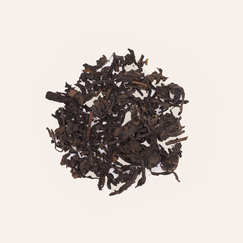
The Leaf Itself (Bud vs. Mature Leaf)
You might expect delicate teas to be gentler—but that’s not always the case.
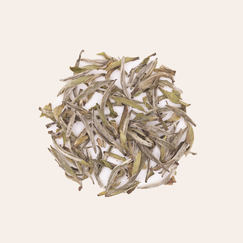
Young buds and early leaves actually contain more caffeine than older, mature leaves. That’s why some high-grade white teas (made mostly from buds) can be quite energizing.
The Tea Master’s Craft (Processing Methods)
What happens after harvest can matter, as well. We’ve discussed different processing methods before, but not in the context of caffeine. What happens to tea leaves and buds after they are selected and picked will also largely impact how the tea affects the drinker. As a general rule and after centuries of honing their craft, tea masters have learned that:
- Roasting can slightly reduce caffeine
- Oolong teas, often roasted, tend to have more moderate amounts of caffeine
- Fermentation (as in some dark teas) can increase caffeine
In a way, processing is how a tea gets its “personality.”
The Brewing (Your Role in the Ritual)
Finally, you (or the person brewing tea) have some control over the caffeine content as well.
For example, you can slightly increase caffeine extraction with:
- Hotter water (though don’t exceed the recommended range)
- Longer steep times
- More leaves used
- More infusions
A general guideline (this is by no means exact) would be:
- For a more gentle, soothing cup → use cooler water, shorter steeps
- For a stronger, invigorating cup → hotter water, longer steeps
What About Decaffeinated Tea?
Sometimes, a Traveler wants to rest and is looking for tea to soothe and calm rather than invigorate. In those cases, one may consider decaffeinated tea. However, it’s important to note that the process often strips away more than just caffeine.
Common methods (like CO₂ or solvent processing) can reduce complexity and depth. The result is a quieter cup, but sometimes at the cost of character.
For many Travelers, there is a better path.
Naturally Caffeine-Free Alternatives
Rather than removing caffeine, you can choose teas that never had it.
Tisanes—herbal infusions—offer warmth and flavor without stimulation.
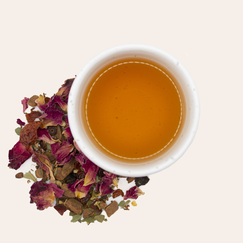
For evenings, quiet moments, or restful endings to long journeys, we often suggest brewing a cup of Mosscap Hearth – Winter’s Warmth. This rooibos-based blend with rosehips and hawthorn delivers an earthy, smooth, and comforting cup—completely caffeine-free and well-suited for winding down by the fire.
A Coffee Alternative for Steady Energy
If you’re stepping away from coffee but still crave depth and ritual, roasted herbal blends can offer a satisfying middle ground.
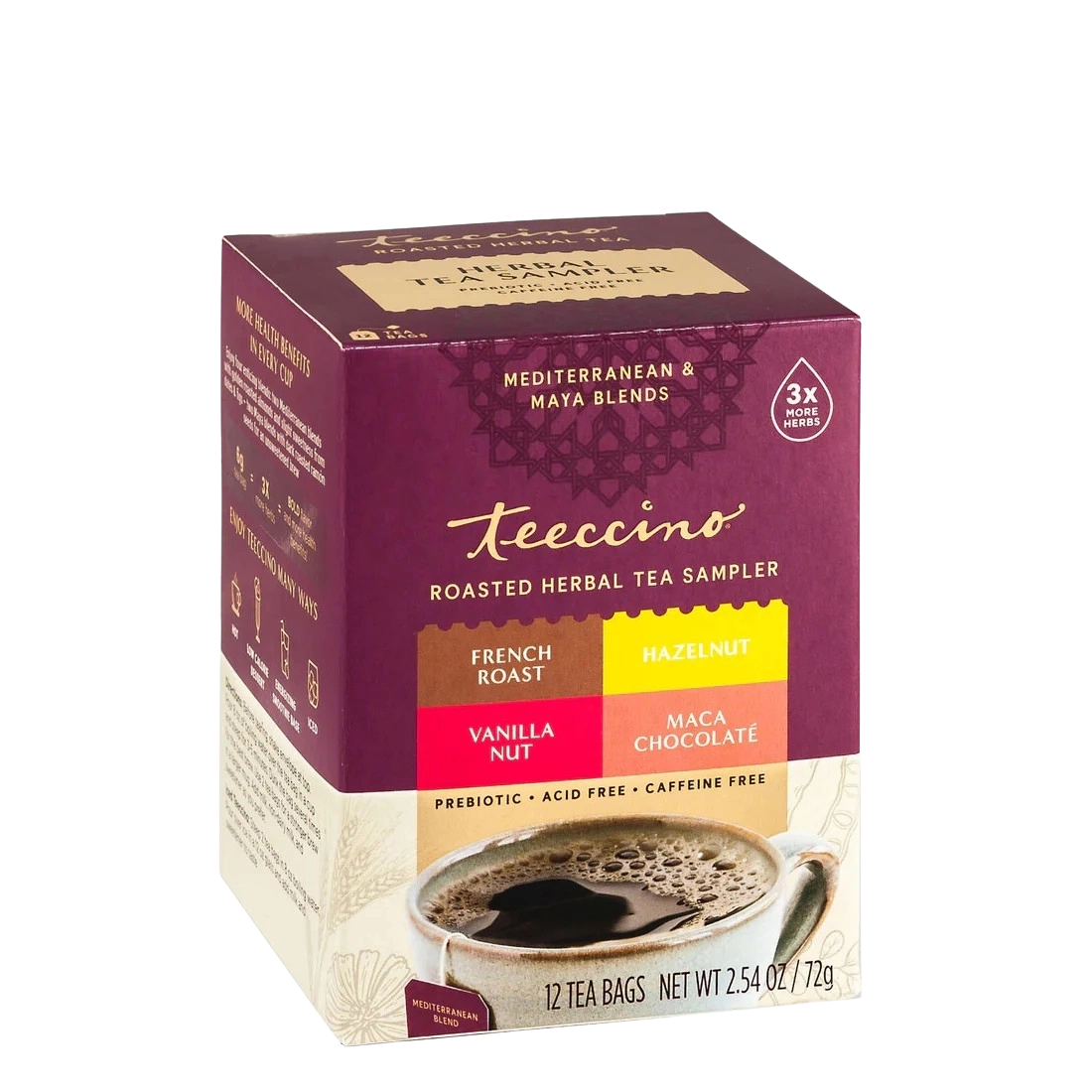
That’s why we offer Teecinno, a tea substitute specifically designed for those who cherish the aroma, ritual, and robustness of coffee but are unable to partake in it. These coffee-like teas (you can even buy them as grounds to put in an auto-drip coffee maker) offer a roasted experience without the sharp peaks and crashes. We recommend exploring the Classic Roasted Herbal Tea Sampler Box.
These blends provide bold, toasty flavors without any caffeine at all. It’s not coffee, but it’s pretty darn close and still a lovely beverage for what it is. It’s also an ideal beverage for those transitioning from coffee to tea.
When You Need Focus and Clarity
Some moments, however, call for sharpness—the early start, the long study, the deep work.
In those cases, you’ll need a strong brew like Tinjure’ Golden Black’ Ilam (Obsidian Embers). The high altitude and minimal processing of this tea make it particularly invigorating, offering a clean, steady lift without the jittery edge often found in coffee.
Choose Your Path Wisely
Despite labels that list milligram readings, the truth is there isn’t really a single “highest” or “lowest” caffeine tea in the ancient pantheon of Chinese teas. There are only the choices you make, shaped by your intended outcome.
- Seeking rest? → herbal blends or mature-leaf teas
- Seeking balance? → oolongs or lighter brews
- Seeking energy? → bud-heavy or high-elevation black teas
Frequently Asked Questions
Does water really affect the taste of tea?
Yes. The mineral content, hardness, and alkalinity of water can significantly influence the flavor, aroma, mouthfeel, and appearance of brewed tea.
Is distilled water good for tea?
Not by itself. Distilled water lacks minerals that help extract and carry flavor compounds from tea leaves. Many tea enthusiasts use distilled water as a base and then add minerals back in specific amounts.
What type of water is best for brewing tea?
There is no universal answer. Different teas respond better to different mineral profiles, depending on the flavors and characteristics you want to emphasize.
Why do tea enthusiasts remineralize water?
Remineralization allows brewers to control water chemistry and highlight specific flavors, textures, and aromas in different tea categories.
Does bottled water make better tea than tap water?
Sometimes, but not always. Different bottled waters contain different mineral levels, and even tap water can vary significantly depending on location and infrastructure.
What did Lu Yu say about water and tea?
In the Classic of Tea (Cha Jing), written around 730 A.D., Lu Yu devoted an entire chapter to water quality and its impact on tea, emphasizing that water selection is an essential part of tea preparation.
Finally, if you still have questions or wish to sample some of these teas, join the Traveling Tea Tavern every Wednesday at HeatSync Labs. You’ll meet like-minded people also exploring new tea journeys, led by Tea Tavern brew master Farrah.
For the Curious Scholar
If you’d like to explore the deeper research behind caffeine in tea, you can begin here:
https://www.sciencedirect.com/science/article/pii/S0308814624001234
https://pubmed.ncbi.nlm.nih.gov/16815703/
https://pubmed.ncbi.nlm.nih.gov/12587987/
Leave a Reply